
Artist · Maker · Small-business owner
About Me
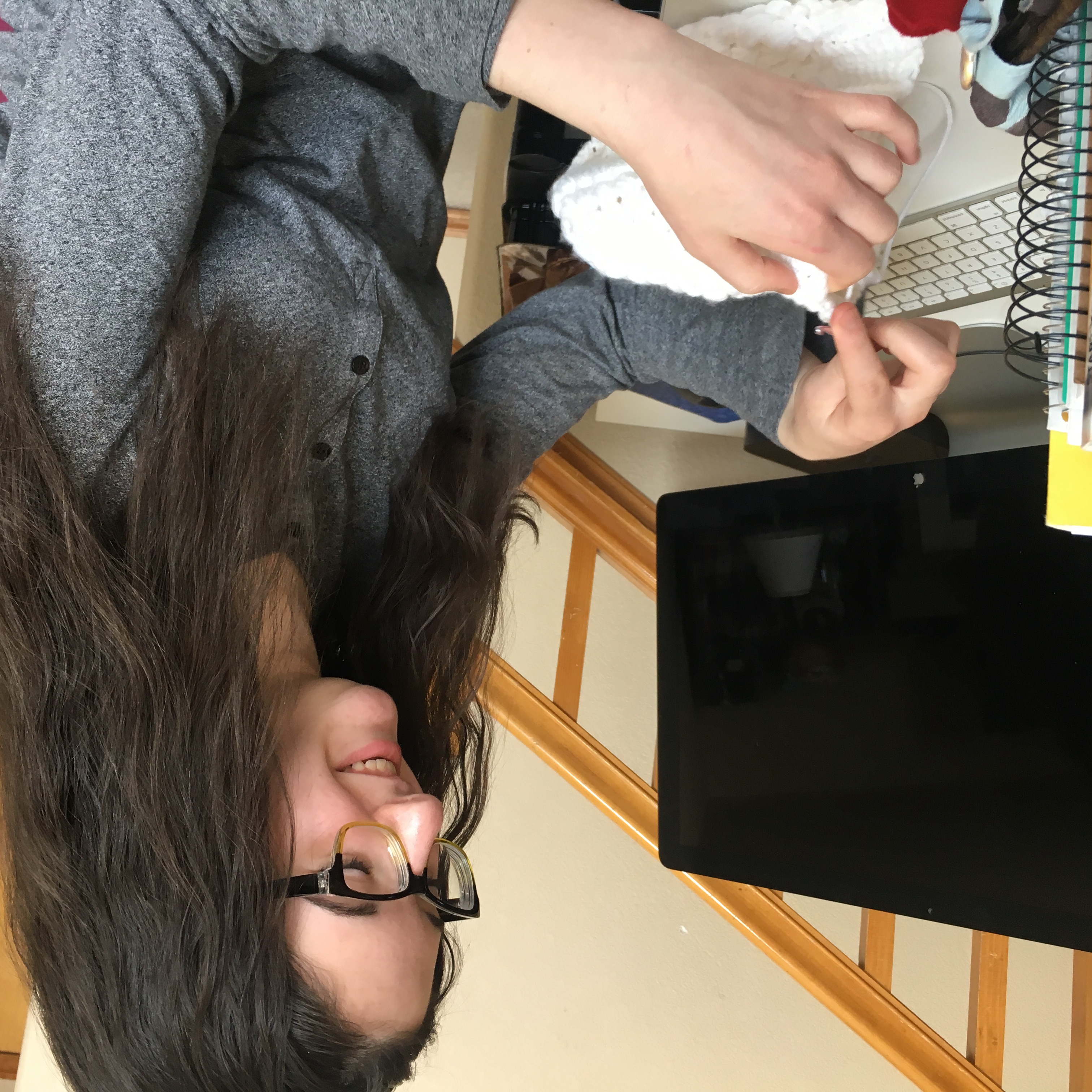
I’m Josephine Stockton, an artist specializing in fiber whose practice is growing toward mixed media and an ever-wider range of materials.
I specialize in fiber arts, working across crochet, cross stitch, weaving, embroidery, sewing, and felting. Fiber is the foundation of my practice, but I don’t want it to be its boundary.
Because crochet is the medium I know most deeply, it is often the easiest way for an idea in my head to take form. I’m excited to become competent in more media, both for what they can do on their own and for what they can add to the work I already do with crochet.
Where it started
Mandatory
Craft Time.
My mom instilled a love of creating in me from a young age through something our family called “Mandatory Craft Time.” Making wasn’t treated as an occasional activity; it became part of how I learned to spend time, solve problems, experiment, and express myself.
My dad is a software engineer, so when we weren’t making something physical, we were learning how to code—sometimes through coding boxes and sometimes with him personally—or working together on electronic and soldering projects. My mom has also made many electronic wearables. Together, they showed me early that making could move freely between physical materials and technology. My parents complement each other well, each bringing their own skills and perspective to the things they make together.
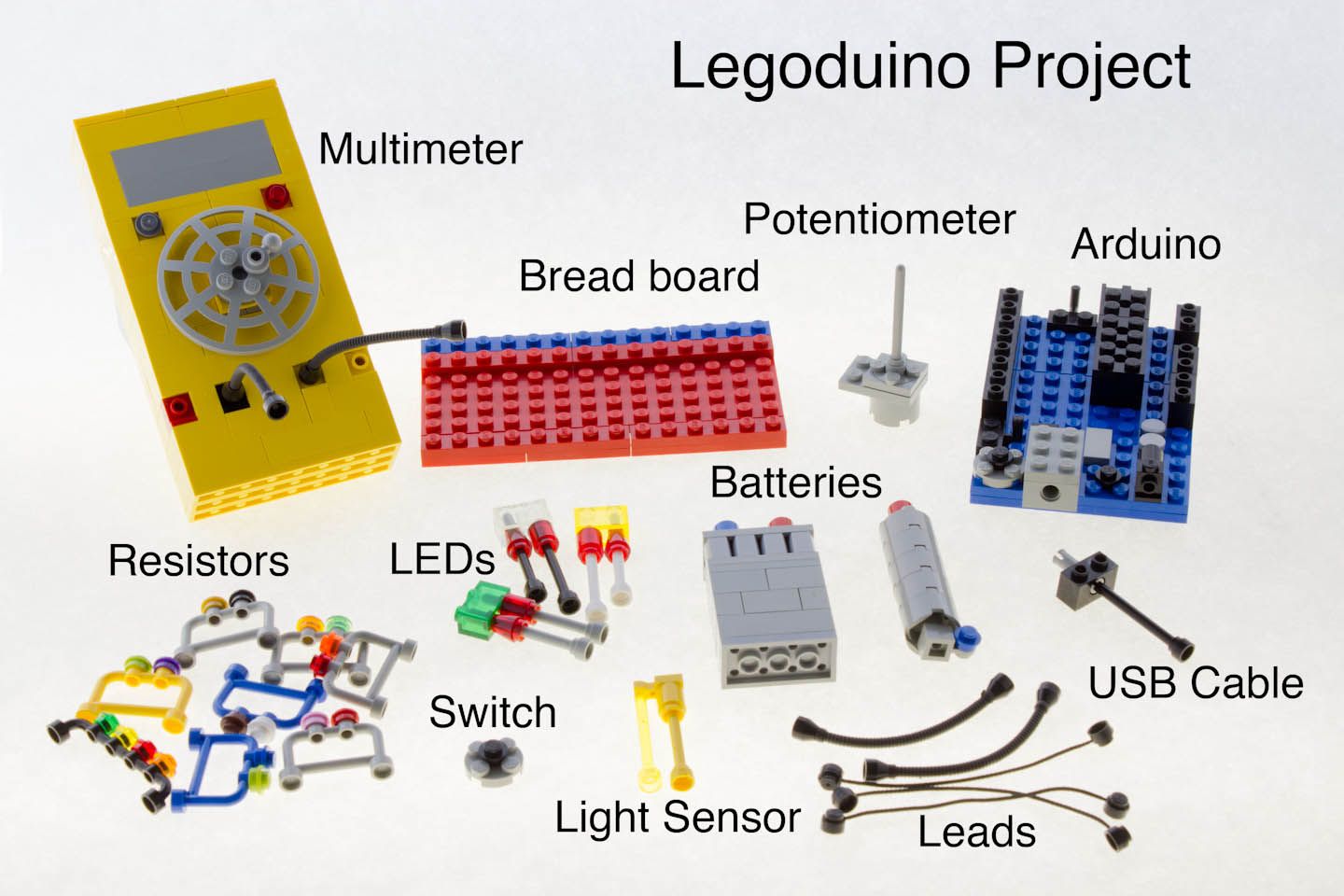
At nine years old, I was so excited to work with electronics alongside my dad that I did not want to wait until he was off work to keep learning. I made The Legoduino Circuit Learning Project ↗, a hands-on circuit-learning system that let me keep experimenting independently.
I have always found that the key to my happiness is to create more than I consume. That foundation gave me permission to try unfamiliar materials, persist when a project did not work the first time, and trust that I could learn by making.
One example of how collaboration can expand my work into mixed media began with a painted underwater canvas I made using crocheted jellyfish, an anglerfish, and crocheted bubbles lined with embroidered beads. My mom added electronic lights behind the canvas and coded a twinkling animation so that the scene lights up. That collaboration showed me how another person’s skills—and another medium—can reveal possibilities I would not have reached alone. I’m excited to return to my early interest in electronics and experiment with how light, code, and other media might become part of my fiber work.
Art, to me, is experimenting with what I can do with the ten fingers I was given.
For my prom, my parents made my dress together. My mom sewed it from scratch using fiber-optic material, my dad 3D printed the wand and other components, and they worked on the electronics and code that controlled it. The wand could scan a color and communicate wirelessly with the dress, changing the color of the entire garment.
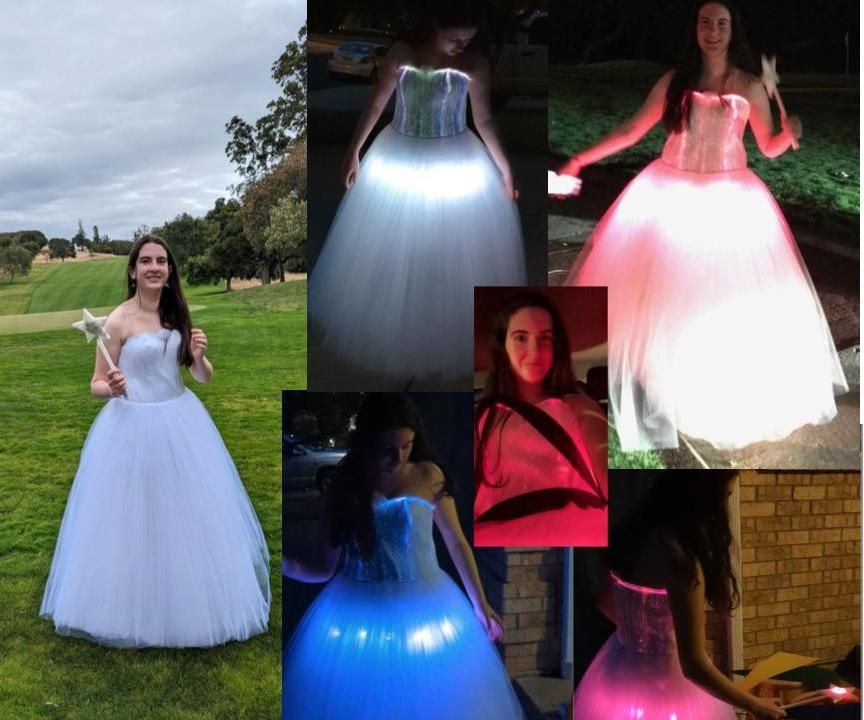
Their Color-Changing Prom Dress With Magic Wand ↗ is a powerful example of the kind of making I grew up around: ambitious, collaborative, and unconcerned with the boundary between art and technology. It showed me that sewing, programming, electronics, and fabrication could all contribute to one idea. My parents inspire me to become a better maker every day; I am continually amazed by what they create.
My mom’s creativity has taken many forms beyond sewing. She also made elaborate decorated cakes, developing her ideas with enough artistry and skill to earn first prize in competitions.
The tradition reaches beyond my parents. My grandmother is an accomplished watercolor artist whose realistic work focuses largely on animals and people, and she also sews incredible quilts. My great-great-grandmother invented what she called “sun paintings,” making artwork from natural substances such as leaves, sticks, bark, and plant fibers. My younger sister is a talented artist as well, especially in drawing and acrylic painting.
Taken together—painting and sun paintings, sewing and fiber work, food art, electronic wearables, code, circuits, and soldering—my family’s work taught me that creativity can move freely among materials, technologies, and traditions, and often becomes most exciting when they overlap. I come from a long line of people who make things, and their work has given me both a foundation and permission to keep experimenting.
Learning through making
Growing through
crochet.
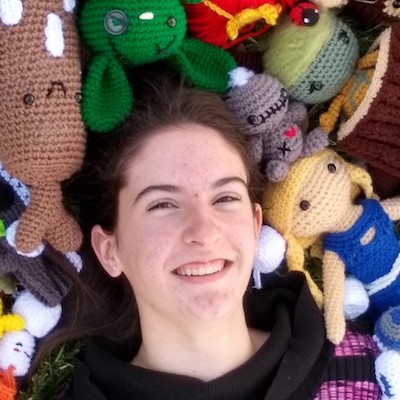
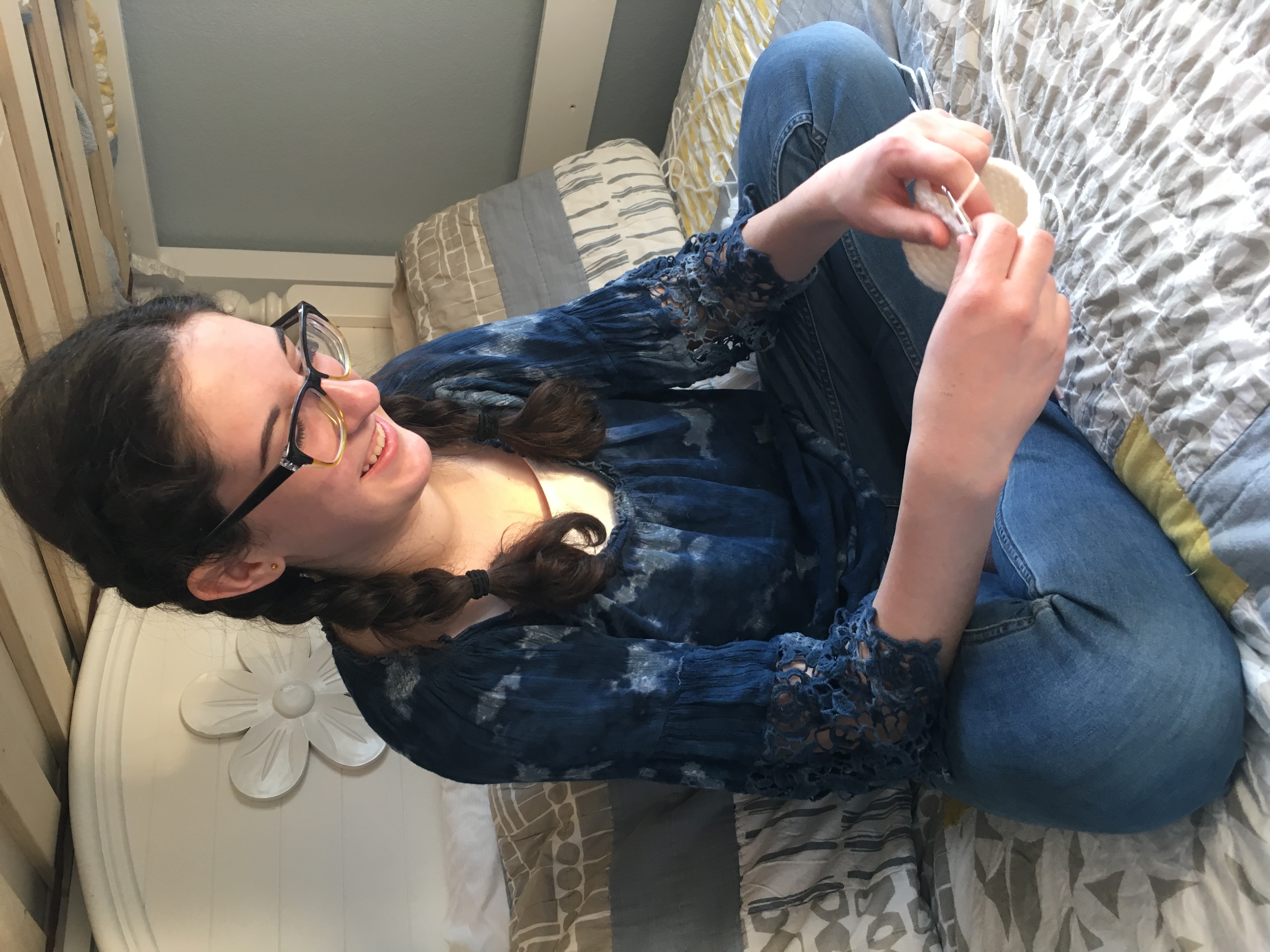
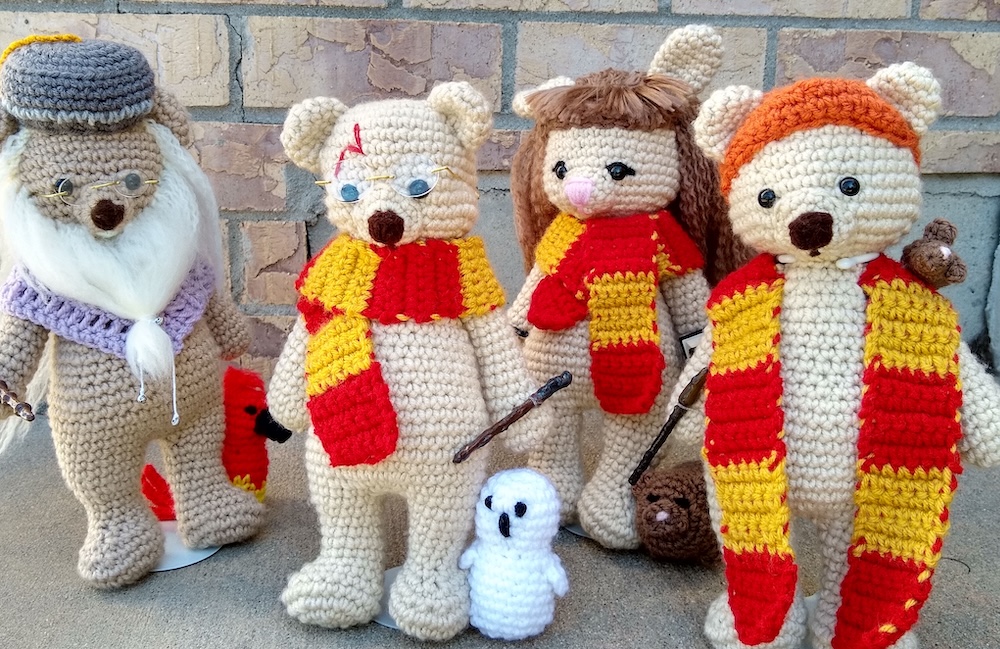
In 2014, when I was ten years old, I taught myself to crochet primarily through YouTube. I watched Yarn Scrap Friday videos by Happy Berry Crochet and hoped that one day I could make toys of my own. Before long, I was bringing yarn to school and the space under my desk was overflowing with skeins. That was when my parents bought me a 4 × 4 rainbow yarn shelf, showing me nothing but support for a hobby that would become a huge part of my life and who I am.
My first amigurumi was a small sphere made from green, blue, and brown variegated yarn. Watching a three-dimensional form emerge from my hands changed the way I understood what fiber could do. When I could not yet read other people’s patterns, I began inventing my own. Later, I taught friends and classmates and discovered how meaningful it was to help someone else experience that same moment of understanding.
I’ve always found any excuse to create. I could take a school project worth only 2% of my grade and turn it into a chance to crochet the characters and make an entire stop-motion film—and I did that not once, but twice. That kind of extra effort was never really about the grade. Making is my happy place, and it has always been a form of therapy for me.
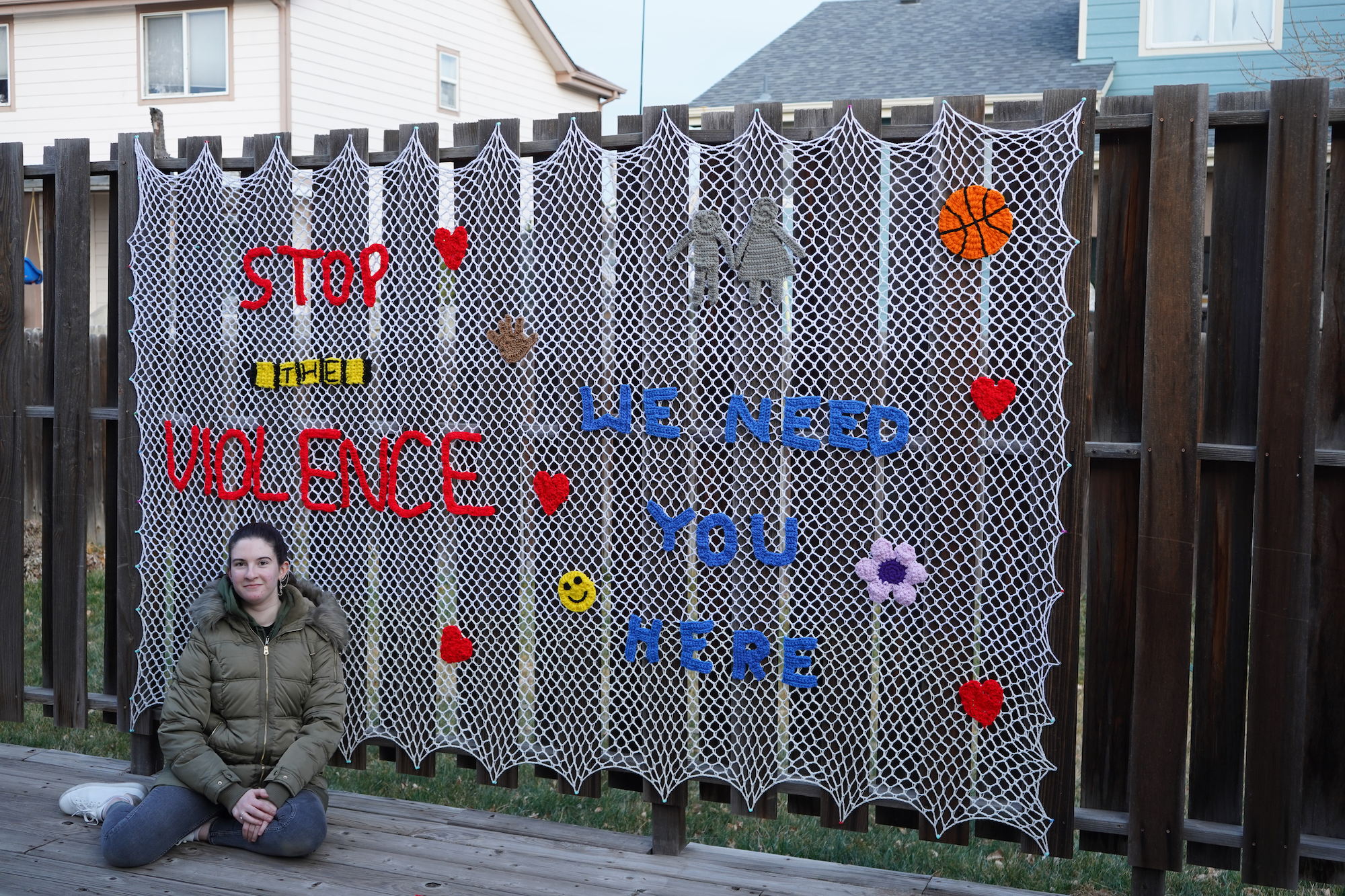
For one of my high school senior projects, I explored yarn bombing ↗ as a form of non-destructive street art addressing youth violence in my community. It was one of my first experiences using crochet to say something, not just make something.
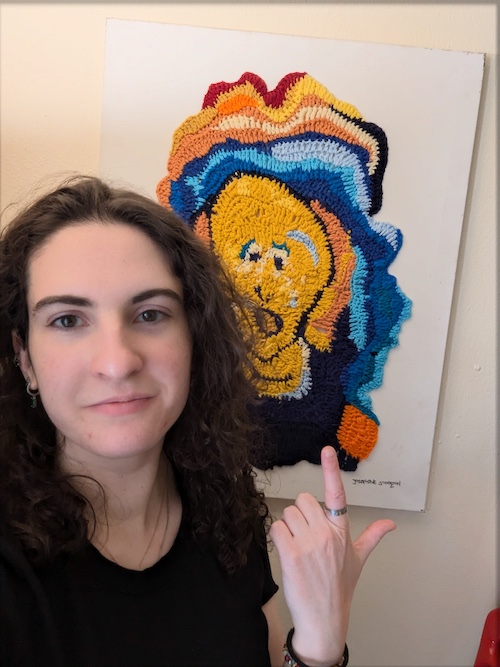
In January 2023, after nearly a decade spent mostly making plushies, I created my first experimental freeform crochet canvas. Unlike the work I had made before, this process let me throw out most of crochet’s usual rules. It feels like painting with yarn: I choose which stitch to place, how many to use, which direction to travel, where each color begins and ends, and whether the surface needs to remain flat at all.
After creating my rendition of The Scream, I went through something many artists struggle with: I worried that I would never make anything as good again. Fortunately, the art bug found me again.
In March 2026, I took the experiment further by creating my first freeform crochet piece to include three-dimensional elements. Small amigurumi figures dangle from the flatter splats of color, paying homage to the plushies where my crochet practice began. Now I intend to keep stretching my creative muscles, mixing different materials and processes, and seeing what else is possible.
Nerdy Crochet · Founded 2018
Where making became a business.
I founded Nerdy Crochet ↗ after years of designing more crochet toys than I could keep. The business became a home for playful patterns, plushies, and STEM-inspired work—including designs based on LEDs, chemistry kits, and blood cells. It also taught me how to develop an idea, share a process, teach through patterns, and connect with people through handmade work.
Check it out ↗
JosephineStockton.com gives me room to show a wider range of artistic abilities. Fiber remains central, while I am free to expand into mixed media, new processes, and work I have not imagined yet.